
It’s 5 PM. The house is quiet, the dog is giving you that look, and you’re staring into the fridge like it holds the secrets to the universe. Spoiler alert: it doesn’t. There’s half a jar of pickles, some sad spinach, and a block of cheese that’s seen better days. This is the moment where most of us reach for the phone to order takeout. But not me. Not anymore.
Two years ago, I was that person. I’d come home from work exhausted, my brain completely fried, and the idea of chopping vegetables or managing three different pots of boiling water felt impossible. Then, my German mother-in-law dropped this bombshell on me: “Why are you stressing over dinner? Make Thüringer Klöße. It’s the ultimate comfort food, and you’ll be surprised how simple it really is.”
I was skeptical. Dumplings? From scratch? In 30 minutes? That sounded like a lie. But desperate times call for desperate measures, so I gave it a shot. And you know what? It worked. It actually worked. Not only was it faster than waiting for a delivery driver, but it also smelled like heaven while it cooked. Those soft, pillowy potato dumplings soaked up that rich, savory gravy, and suddenly, my stressful Tuesday felt like a cozy Sunday in a Bavarian cabin.
I’ve tested this Thüringer Klöße recipe countless times since then. I’ve tweaked the potato-to-flour ratio, I’ve experimented with different types of gravy, and I’ve even tried making them in my Instant Pot (don’t bother, stick to the stovetop). This is the version that consistently wins. It’s hearty, it’s warm, and it feels like a hug on a plate. If you’re looking for a weeknight meal that feels fancy but doesn’t require a culinary degree, this is your answer.
Real talk: there’s something deeply satisfying about making something from scratch when you’re tired. It proves you’re still capable, even when your energy is at zero. Plus, Thüringer Klöße are incredibly forgiving. If your dumplings aren’t perfectly round? No one will care. If your gravy is a bit thin? Just let it simmer a little longer. The only rule that matters is that you eat them while they’re hot.
So, put down the phone. Close the delivery app. Let’s make some dinner that actually nourishes your soul. This recipe is my go-to for those “5 PM panic” moments. It’s the Thüringer Klöße version that changed my life, and I’m pretty sure it’s going to change yours, too.
Why You’ll Love This Comfort Food Recipe
Let’s be honest, you’re here because you’re hungry, and you’re here because you want something easy. Here’s why this Thüringer Klöße recipe is about to become your new best friend:
It’s a One-Pot Wonder (Almost) — You boil the dumplings in one pot and simmer the gravy in another. That’s it. No complex techniques, no sous-vide machines, no sous-chefs required. The cleanup is a breeze because you’re basically just washing two pots and a spoon.
Potato Power — We’re using simple, humble potatoes. Specifically, mealy potatoes like Russets or King Edwards. These absorb the flour and milk perfectly, creating that signature soft, spongy texture that soaks up every drop of sauce. If you use waxy potatoes, the dumplings will fall apart. Trust me on this one.
Flavor Bomb Gravy — The sauce isn’t an afterthought here. It’s rich, meaty (or mushroomy if you go veg), and deeply savory. The trick is deglazing the pan with a splash of red wine or broth. It adds a depth of flavor that takes you straight to a cozy German biergarten.
Make-Ahead Friendly — Here’s the secret weapon: you can shape the dumplings hours ahead of time. Put them on a tray in the fridge until you’re ready to boil them. This means when you get home at 7 PM, your “active” cooking time is practically non-existent. You just boil and serve.
Comfort Level: Off the Charts — There’s nothing like warm, soft dumplings mixed with hot gravy to fix a bad day. It’s edible therapy. This is my answer to “what’s for dinner” when I’m tired and don’t want takeout. It’s reliable, it’s filling, and it tastes like home.
Ingredients for Your Thüringer Klöße
Here’s the best part: you probably have most of this already in your pantry. Thüringer Klöße rely on simple, high-quality ingredients. You don’t need fancy imports or hard-to-find spices. Let’s break down what you need and why each piece matters.
1 kg Mealy Potatoes (2.2 lbs) — This is the star of the show. You need potatoes that are starchy and fluffy, not waxy. Russet potatoes are your best bet. Boil them in their skins until tender, then peel and mash them while hot. If you use waxy potatoes, the dumplings won’t hold together properly. I use a potato ricer for the smoothest texture, but a fork works in a pinch.
250g Semolina (Grieß) (1.75 cups) — This is what gives the dumplings their structure and that slightly chewy, soft bite. Semolina absorbs liquid well and helps bind the potatoes. If you can’t find semolina, fine bulgur wheat can work in a pinch, but semolina is traditional and superior. I buy the large-grain semolina and grind it slightly finer if needed.
1 Egg — Just one large egg. It acts as the binder, helping the semolina and potatoes stick together. Don’t skip this, or your dumplings might disintegrate in the boiling water.
250ml Milk (1 cup) — Warm milk is crucial. You’ll add it to the potato mixture gradually. It hydrates the semolina and adds richness. Use whole milk for the best flavor, but 2% works too.
Salt and Nutmeg — Salt is obvious. Nutmeg is the secret weapon. It adds that warm, earthy note that defines German potato dishes. Don’t be shy with it, but don’t overdo it either. A good pinch is all you need.
Butter and Flour (for Gravy) — For the classic brown gravy, you’ll need butter and all-purpose flour to make a roux. This thickens the sauce and gives it body. Unsalted butter is best so you can control the saltiness.
Onion — One medium onion, finely diced. We’ll sauté this for the gravy. Sweet, caramelized onions add a foundational layer of flavor. I recommend a yellow onion for its balance of sweetness and pungency.
Vegetable or Beef Broth — 500ml (2 cups). This forms the base of your gravy. Use a good quality broth. If you’re making this with a roast, use the pan drippings instead! It adds incredible depth. For a vegetarian version, a rich mushroom broth works beautifully.
Red Wine (Optional) — 100ml (½ cup). A dry red wine like Merlot or Cabernet adds acidity and complexity to the gravy. It cuts through the richness of the dumplings. If you don’t drink wine, extra broth or a splash of vinegar works fine.
Storage Note: The dumpling dough can be made and chilled in the fridge for up to 4 hours. This actually helps them firm up, making them easier to shape. The gravy can be made ahead and reheated gently.
Equipment You’ll Need
You don’t need fancy equipment. Here’s what I actually use to make this Thüringer Klöße without losing my mind:
Large Pot with Lid — You need enough space for the dumplings to boil without overcrowding. A 6-quart pot is ideal. If you don’t have one, a large Dutch oven works perfectly.
Potato Ricer or Fork — A ricer gives you those perfect, lump-free potato strands. If you don’t have one, a sturdy fork will do, but you’ll need to mash thoroughly. Avoid blenders, as they make the potatoes gummy.
Mixing Bowl — A large bowl for combining the potatoes, semolina, and egg. Something wide is better for mixing by hand.
Small Saucepan — For heating the milk and making the gravy. A non-stick pan makes cleanup easier.
Slotted Spoon — Essential for gently removing the delicate dumplings from the boiling water without breaking them. A regular spoon might be too awkward.
Wet Hands — Okay, this isn’t a tool, but it’s critical. Keep a bowl of water nearby to wet your hands when shaping the dumplings. This prevents the dough from sticking to your skin.
How to Make Thüringer Klöße Step-by-Step
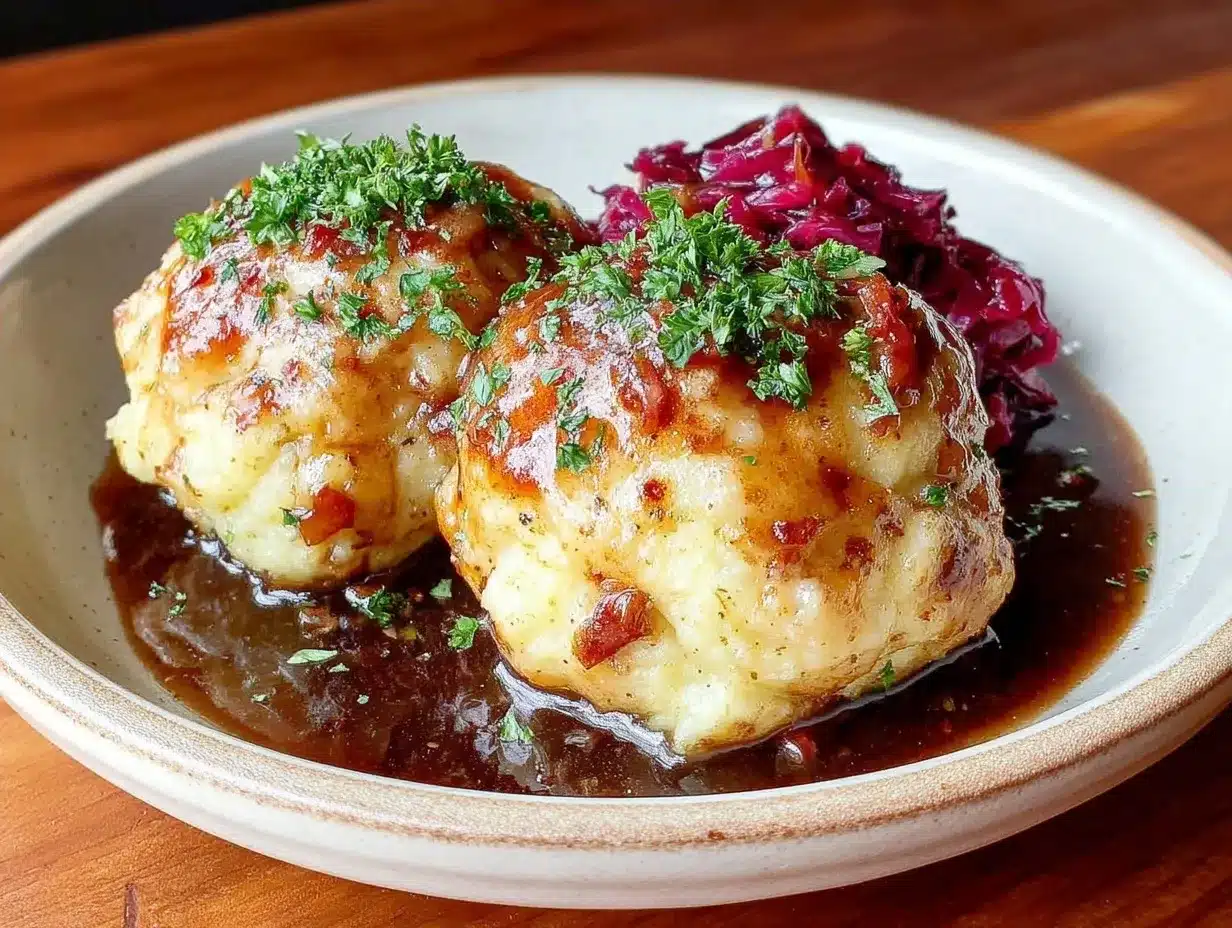
Alright, let’s make this! I’m walking you through exactly how I do it. It’s simpler than it looks, I promise.
Step 1: Prep the Potatoes
Boil your potatoes in their skins until they are completely tender. This takes about 20–25 minutes. Pierce them with a fork to check. Once cooked, drain them and let them cool just enough to handle. Peel them while warm (it’s easier) and immediately pass them through a potato ricer into a large bowl. If you’re using a fork, mash them until there are absolutely no lumps. Lumpy potatoes = lumpy dumplings. Tip: If the potatoes cool down too much, they become hard to work with. Keep them warm.
Step 2: Mix the Dough
To the hot mashed potatoes, add the semolina, egg, salt, and nutmeg. Mix well. Then, gradually stir in the warm milk. You want a soft, pliable dough. It should be sticky but manageable. If it’s too wet, add a sprinkle more semolina. If it’s too dry, add a splash more milk. Knead it gently with your hands for about 2–3 minutes. The dough should be smooth. Troubleshooting: If the dough cracks when you press it, it’s too dry. Add milk. If it sticks to your hands excessively, add semolina.
Step 3: Shape the Dumplings
Fill a bowl with cold water. Wet your hands thoroughly. Take a golf-ball-sized piece of dough and roll it into a smooth, round ball. Then, press your thumb into the center to create a slight indentation (this helps them cook evenly). Place them on a floured tray. Repeat with the rest of the dough. You should get about 8–10 dumplings. Tip: Keep your hands wet while shaping to prevent sticking. Work quickly so the dough doesn’t dry out.
Step 4: Boil the Dumplings
Bring a large pot of salted water to a gentle boil. Do not let it roll violently, or the dumplings might break. Gently drop the dumplings into the water. Reduce the heat to a simmer. Cover the pot and cook for 15–20 minutes. Do not peek too often! Sensory Cue: The dumplings will float to the top when they are nearly done. Give them a gentle nudge with a spoon; if they spring back, they’re ready.
Step 5: Make the Gravy
While the dumplings boil, make the gravy. In a saucepan, melt the butter over medium heat. Add the diced onion and sauté until soft and golden. Sprinkle the flour over the onions and cook for 1–2 minutes to make a roux. Slowly whisk in the broth and red wine. Simmer for 5–10 minutes until thickened. Season with salt, pepper, and a pinch of thyme. Troubleshooting: If the gravy is too thick, add more broth. If it’s too thin, let it simmer longer or add a slurry of cornstarch and water.
Step 6: Serve
Remove the dumplings from the water with a slotted spoon and place them on a warm plate. Slice each dumpling open (carefully, it’s hot!) and spoon the hot gravy over the inside and outside. Serve immediately. Total Time: About 30–35 minutes from start to finish.
Tips & Tricks for Perfect Dumplings
Here’s everything I’ve learned from making this dozens of times. These little secrets make the difference between good and great.
Keep Your Hands Wet — This is non-negotiable. Potato dough is sticky. If your hands are dry, the dough will cling to them, and you’ll end up with a mess. Keep a bowl of water next to you and dip your hands frequently.
Don’t Overwork the Dough — Once you add the semolina and milk, mix just until combined. Over-kneading can make the dumplings tough. You want them soft and tender, not chewy like bread.
Gentle Boil — A rolling boil is the enemy of delicate dumplings. Keep the water at a gentle simmer. If the water is too aggressive, the dumplings will tumble around and break apart.
Test One First — Before boiling all the dumplings, cook one to test the seasoning and texture. This saves you from having to fix a whole batch.
Rest the Dough — If you have time, let the shaped dumplings rest in the fridge for 15–20 minutes before boiling. This helps them hold their shape better in the water.
Variations & Substitutions
Once you’ve nailed the basic version, here’s how to mix it up. I’ve tried all of these, and they’re all winners.
Vegetarian Gravy — Skip the beef broth and use a rich vegetable or mushroom broth. Add some chopped mushrooms to the onion base for a meaty texture. It’s incredibly satisfying.
Herb Infusion — Add fresh chopped parsley or chives to the dumpling dough. It adds a fresh, green contrast to the rich potato flavor.
Gluten-Free Option — Substitute the semolina with gluten-free breadcrumbs or a gluten-free flour blend. Note that the texture might be slightly denser, but it still works.
Protein Swap — Serve these with roasted chicken, pork schnitzel, or even a hearty lentil stew. They pair well with almost anything savory.
Serving & Storage
How to Serve: Plate the sliced dumplings generously with gravy. Pair with steamed green beans or a crisp cucumber salad to cut through the richness. I also love serving them with crispy garlic chicken for a fusion twist.
Storage: Store leftover dumplings and gravy in airtight containers in the fridge for up to 3 days.
Reheating: Reheat gently in a saucepan with a splash of broth or water. The microwave can make the dumplings rubbery, so stovetop is best.
Freezing: You can freeze uncooked dumplings on a tray, then transfer to a bag. Cook from frozen, adding 5 minutes to the boiling time. Cooked dumplings do not freeze well; they become grainy.
FAQs About Thüringer Klöße
Q: Can I use instant potatoes?
A: I don’t recommend it. Fresh potatoes have the right texture and moisture content. Instant potatoes can make the dough too dry and crumbly.
Q: Why did my dumplings fall apart?
A: This usually happens if the water was boiling too vigorously or if the dough was too wet. Make sure to simmer, not boil, and adjust the semolina if the dough is sticky.
Q: Can I make these ahead of time?
A: Yes! Shape the dumplings and store them on a tray in the fridge for up to 4 hours before boiling. This is great for meal prep.
Q: What kind of wine goes with this?
A: A dry red wine like Spätburgunder (Pinot Noir) is traditional. If you’re not drinking wine, extra broth or a splash of balsamic vinegar works well.
Final Thoughts
Making Thüringer Klöße isn’t just about feeding your family; it’s about slowing down and enjoying the process. Even on the busiest nights, there’s something comforting about the smell of boiling potatoes and simmering gravy. It turns a stressful evening into a cozy one.
I hope this recipe becomes a staple in your kitchen, just like it has in mine. Don’t be afraid to experiment with the gravy or add your favorite herbs. Cooking is personal, and this recipe is a blank canvas for your creativity.
So, what are you waiting for? Grab those potatoes, boil some water, and treat yourself to some real comfort food. Drop a comment and tell me how it turned out! I’d love to hear about your dumpling adventures. 🥔✨
Pin This Recipe!


Thüringer Klöße: 30min Easy Comfort Food
- Total Time: 35 Minuten
- Yield: 8-10 Portionen 1x
Description
Ein einfaches und schnelles Rezept für traditionelle thüringische Kartoffelklöße mit einer reichen Soße, das sich perfekt für stressige Wochendabende eignet.
Ingredients
- 1 kg mehligkochende Kartoffeln (z. B. Russet)
- 250g Grieß
- 1 Ei
- 250ml Milch (warm)
- Salz
- Muskatnuss
- Butter (für die Soße)
- Mehl (für die Soße)
- 1 Zwiebel (fein gewürfelt)
- 500ml Gemüse- oder Rinderbrühe
- 100ml Rotwein (optional)
Instructions
- Kartoffeln in der Schale kochen, bis sie weich sind (ca. 20–25 Minuten). Abgießen, schälen und noch warm durch eine Kartoffelpresse drücken oder sehr fein zerdrücken.
- Grieß, Ei, Salz und Muskatnuss zu den heißen Kartoffeln geben. Warme Milch nach und nach unterrühren, bis ein weicher, formbarer Teig entsteht. Teig ca. 2–3 Minuten kneten, bis er glatt ist.
- Hände in eine Schale mit kaltem Wasser tauchen. Teigstücke in Golfballgröße nehmen, zu runden Klößen formen und einen kleinen Eindruck mit dem Daumen hineindrücken.
- Ein großes Topf mit Salzwasser zum sanften Kochen bringen. Klöße vorsichtig hineingeben und bei schwacher Hitze 15–20 Minuten köcheln lassen, bis sie aufsteigen.
- Für die Soße Butter in einem Topf schmelzen, Zwiebeln glasig dünsten. Mehl hinzufügen und kurz mitrösten. Brühe und Rotwein angießen, unter Rühren 5–10 Minuten einkochen lassen, bis die Soße eindickt. Mit Salz, Pfeffer und Thymian abschmecken.
- Klöße mit einem Schaumlöffel herausnehmen, aufwärmen und aufgeteilt mit der heißen Soße servieren.
Notes
Die Klöße können bis zu 4 Stunden im Kühlschrank aufbewahrt werden, bevor sie gekocht werden. Für eine glutenfreie Variante kann Grieß durch glutenfreie Semmelbrösel ersetzt werden. Die Soße kann auch mit Pilzbrühe für mehr Tiefe zubereitet werden.
- Prep Time: 15 Minuten
- Cook Time: 20 Minuten
- Category: Hauptgericht
- Cuisine: Deutsch
Nutrition
- Serving Size: 2-3 Klöße mit Soße
- Calories: 450
- Sugar: 3
- Sodium: 600
- Fat: 12
- Saturated Fat: 6
- Carbohydrates: 65
- Fiber: 4
- Protein: 10
Keywords: Thüringer Klöße, Kartoffelklöße, deutsche Küche, Comfort Food, Rezept, Soße, Grießklöße